What is Green Building?
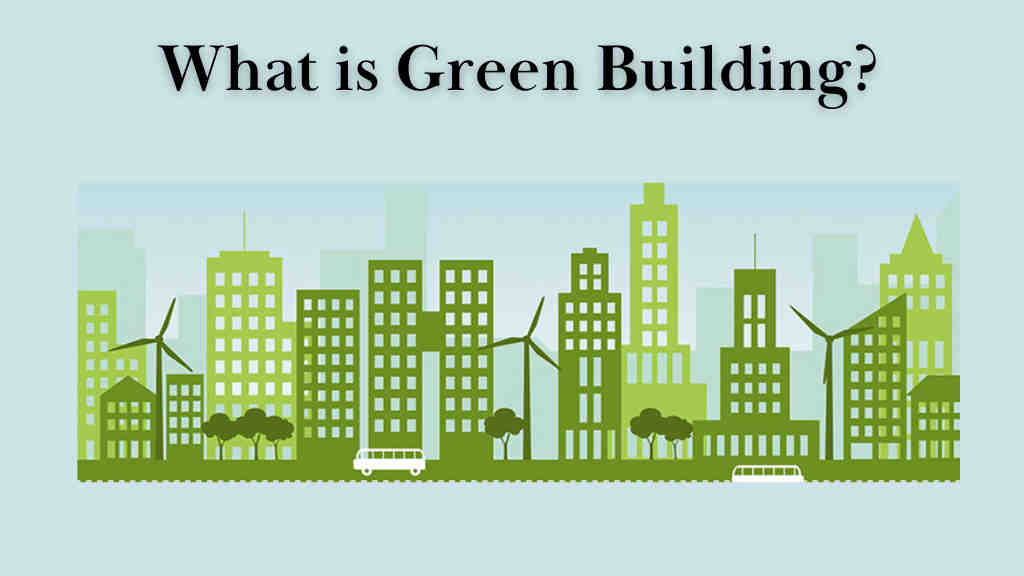
Green Building refers to the process of planning, designing, constructing, and operating buildings with the following primary considerations at their core: energy consumption, water use, indoor environmental quality, material selection, and the building's impact on its surroundings.
The use of earth bricks, concrete, and wood in everyday construction has been pursued since the dawn of modern times and with increasing demands, which is leading in the destruction of trees and ongoing mining of natural resources. The revolutionary idea of green building is currently a focus of many builders and other construction businesses in an effort to regulate and sustain this frightening scenario.
What is Green Building?
The idea of building high-performance structures that have no adverse effects on the environment throughout the project's life-cycle, including planning, designing, construction, performance, maintenance, restoration, and bulldozing, is also referred to as green construction or sustainable building.
When developing a Green Building to support a healthy and unpolluted environment within and around the structure, there are many factors that must be taken into consideration. Some of these factors include energy use, water usage, indoor atmosphere, residents' lifestyle quality, and material selection.
What Is Green Building Concept?
A green building concept is to create a building that is sustainable and uses less water, uses less energy, protects natural resources, creates less waste, and provides healthier environments for occupants than a standard building. These practices also reduce water waste.
What Are The Importance Of Green Building?
We have a very harmful impact on nature and our surrounds by using and squandering the majority of our natural resources due to the increasing need for development and growth of our societies. We must find a way to use social and economic resources in the future to meet our demands. Here are some reasons why putting green building into practice is a smart idea:
Let’s Have A Look At The Environmental Benefits:
- The natural system and biodiversity should be preserved and improved.
- Decreases energy and water waste.
- Supports a healthy lifestyle and improves the quality of the air and water.
- Creates a psychologically-optimized environment while preserving and maintaining the current environment.
What Are The Economic Benefits Of Green Building?
- Higher property value and lower construction costs.
- Increases productivity and wellness of inhabitants.
- Reduces utility costs and other household expenses by using water and energy effectively.
- Ideal for producing and promoting green goods.
List Of Social Benefits
- Existing homes may go green in simple, economical ways.
- Boost the quality of the air inside.
- Lessen the impact on local infrastructure
- Designing a green building process
What Are The Steps Involved In Green Building Construction?
Green building concept promoted in the real estate construction industry. The goal of this approach is to control and sustain energy usage while giving the next generation a greener, healthier lifestyle. Let's comprehend the essential procedures for green building so that we may protect our natural resources and meet our requirements at the same time:
Step 1: Recognize the goals and requirements of the program and create a sound plan that includes an estimated budget for the complete construction, the materials needed, a site assessment, the provision of minimal facilities, and the adherence to necessary energy consumption.
Step 2: Choosing and assembling a group of skilled designers, architects, builders, and artisans.
Step 3: Assess all environmental and climatic factors to develop design plans for the intended site.
Step 4: Adapt the buildings' configuration and design to effectively control temperature and thermal mass.
Step 5: Creating the buildings' efficient support systems for efficient water use, trash disposal, ventilation, and other arrangements.
Step 6: Interiors that are effectively built to encourage high-efficiency energy preservation and conservation by recycling garbage.
Step 7: Documentation and drawings of the requirements for the buildings.
Step 8: Construction of the building and approval to ensure that it complies with the required green building standards.
Step 9: Maintenance verification is essential for safety and security once construction is complete.
When designing and developing green buildings, all the aforementioned processes must be followed to ensure lifespan and understanding the question “What Is Green Building Concept” is also very important.
How Does Green Building Contribute To Environmental Preservation?
The Green Building Concept is one that is built with the help of as much recycled waste as possible together with other building components, like geothermal heating and energy-efficient appliances.
Environmental goals can be maintained by using green building materials and technology to create energy- and environmentally-friendly housing.
What Kind of Materials are used in Green Building Construction?
To create a climate-controlled internal environment, utilize green wood, such as bamboo, cork, etc., for the flooring and cabinets, and precast concrete slabs for the flooring, roofs, walls, facades, etc. By combining straw bales with cement, lime, clay, and gypsum, you can build a mud house, use them for framing, and more.
You can also use recycled plastics to make planters, create DIY projects for interior decoration, and use reclaimed or recycled wood to stop deforestation. Wood can be replaced with recycled steel to strengthen the structure's resistance to natural disasters.
What Green Building Concept Technologies Are There?
The use of Porotherm Bricks ands other environmentally friendly thermal insulation materials, the Net Zero Concept for efficient energy consumption and carbon emissions, the installation of the right HVAC system to reduce electricity consumption, the use of solar power while maintaining the proper conditions and system size, the use of smart grid appliances like refrigerators, washing machines, mixer grinders, and others for saving energy, and the construction of sustainable buildings.
Green Buildings In India
In comparison to a conventional construction, a green building consumes less water, maximizes energy efficiency, protects natural resources, produces less waste, and offers healthier places for occupants. The IGBC is the nation's foremost green building organization.
The Energy Conservation Building Code (ECBC) was introduced by the Indian Bureau of Energy Efficiency (BEE). The code establishes minimum requirements for energy efficiency in building design and construction for structures with a connected power demand of 500 KW or 600 KVA and a minimum conditioned area of 1,000 m2.
Any building that complies with the code's energy performance index, which ranges from 90 kW/sqm/year to 200 kW/sqm/year, is known as an "ECBC Compliant Building."
Conclusion
Green building construction may really enable us to meet our demands while preserving the ecological and biological balance with the appropriate team, the right efforts, and the right understanding. All we have to do to give our future generation a healthy environment to live in is follow the sustainability standards, work by the regulations, and maintain things properly and regularly.
Read Also : Top 10 Best Luxury Apartments in Kochi
Read Also : Top 10 Best Luxury Apartments in Lucknow
Read Also : Top 10 Best Affordable Housing Project in Goa
Read Also : Top 10 Best Affordable Housing Project in Lucknow
Read Also : Top 10 Best Affordable Housing Project in Ghaziabad
Read Also : Top 10 Best Affordable Housing Project in Ahmedabad
Read Also : Top 10 Best Affordable Housing Project in Hyderabad
Read Also : Top 10 Best Affordable Housing Project in Bangalore
Read Also : Top 10 Best Affordable Housing Project in Mumbai
Read Also : Top 10 Best Affordable Housing Project in Chennai
Read Also : Top 10 Best Affordable Housing Project in Bhopal
Read Also : Top 10 Best Affordable Housing Project in Chandigarh
Read Also : Top 10 Best Luxury Apartments in Delhi
Read Also : Top 10 Best Affordable Housing Project in Kochi
Read Also : Top 10 Best Affordable Housing Project in Kolkata
Read Also : Top 10 Best Luxury Apartments in Faridabad
Read Also : Top 10 Best Commercial Property in Gurgaon
Read Also : Top 10 Best Commercial Property in Faridabad
Read Also : Top 10 Best Commercial Property in Mumbai
Read Also : Top 10 Best Commercial Project in Pune
Read Also : Top 10 Best Commercial Property In Delhi
Read Also : Top 10 Best Commercial Property in Ghaziabad
Read Also : Top 10 Best Luxury Villas in Mumbai 2023
Read Also : Top 10 Best Luxury Villas in Chennai
Read Also : Top 10 Best Luxury Villas in Bangalore
Read Also : Top 10 Best Luxury Villas in Gurgaon
Read Also : Top 10 Best Luxury Villas in Pune
Read Also : Top 10 Best Luxury Villas in Hyderabad
Read Also : Top 10 Best Luxury Villas in Lucknow
Read Also : Top 10 Best Luxury Villas in Chandigarh
Read Also : Top 10 Best Commercial Property in Chandigarh
Read Also : Top 10 Best Commercial Property in Bangalore
Read Also : Top 10 Best Commercial Property In Chennai
Read Also : Top 10 Best Commercial Property In Ahmedabad
Read Also : Top 10 Best Commercial Property in Hyderabad
Read Also : Top 10 Best Commercial Property in Kolkata
Read Also : Top 10 Best Commercial Property in Lucknow
Read Also : Top 10 Best Commercial Property in Bhopal
Read Also : Top 10 Best Luxury Villas in Ghaziabad
Read Also : Top 10 Best Luxury Villas in Ahmedabad
Read Also : Top 10 Best Luxury Villas in Delhi
Read Also : Top 10 Best Luxury Villas in Kolkata
Read Also : Top 10 Best Commercial Property in Kochi
Read Also : Top 10 Best Commercial Property In Goa
Read Also : Top 10 Best Villas in Noida Extension
Read Also : Top 10 Interior Designers In Ghaziabad
Read Also : Top 10 Interior Designers In Ahmadabad
Read Also : Top 10 Interior Designers in Chandigarh
Read Also : Top 10 Interior Designers In Kochi
Read Also : Top 10 Interior Designers In Lucknow
Read Also : Top 10 Interior Designers in Faridabad
Read Also : Top 10 Interior Designer In Goa
Read Also : Top 10 Interior Designers In Bangalore
Read Also : Top 10 Interior Designer In Kolkata
Read Also : Top 10 Interior Designers In Chennai
Read Also : Top 10 Interior Designers In Bhopal
Read Also : Top 10 Best Interior Designers in Mumbai
Read Also : Top 10 Interior Designers In Hyderabad
Read Also : Top 10 Interior Designers in Pune
Read Also : Top 10 Interior Designers in Thane
Read Also : Top 10 Best Lowrise Apartments In Noida
Read Also : Top 10 Best Lowrise Apartments In Ghaziabad
Read Also : Top 10 Best Lowrise Apartments in Chennai
Read Also : Top 10 Best Low-rise Apartments In Ahmedabad
Read Also : Top 10 Best Low-Rise Apartments In Bangalore
Read Also : Top 10 Best Low-Rise Apartments In Mumbai
Read Also : Top 10 Best Lowrise Apartments In Hyderabad
Read Also : Top 10 Best Low-Rise Apartments In Bhopal
Read Also : Top 10 Best Low-Rise Apartments In Faridabad
Read Also : Top 10 Best Low-Rise Apartments In Lucknow
Read Also : Top 10 Best Low-Rise Apartments In Pune
Read Also : Top 10 Best Low-rise Apartments In Navi Mumbai
Read Also : Top 10 Best Low-Rise Apartments In Chandigarh
Read Also : Top 10 Best Ready To Move Flats In Gurgaon
Read Also : Top 10 Best Ready To Move Flats In Noida
Read Also : Top 10 Best Ready To Move Flats In Pune
Read Also : Top 10 Best Ready To Move Flats In Mumbai
Read Also : Top 10 Best Ready To Move Flats In Chennai
Read Also : Top 10 Best Ready To Move Flats In Delhi
Read Also : Top 10 Best Ready To Move Flats In Chandigarh 2023
Read Also : Top 10 Best Ready To Move In Apartments In Hyderabad 2023
Read Also : Top 10 Best Ready To Move Apartments In Lucknow
Read Also : Top 10 Best Ready To Move In Apartments In Thane 2023
Read Also : Top 10 Best Under Construction Projects In Bangalore 2023
Read Also : Top 10 Best Under Construction Projects In Noida 2023
Read Also : Top 10 Best under construction projects in Delhi 2023
Read also:- The Rise of Sustainable Living: Eco-Friendly Homes in India
Read also:- Interior Design Trends Transforming Indian Homes: Expert Insights
Read also:- ROI In Real Estate: Analysing Returns And Profits For Indian Investors
Read also:- Navigating Legalities: Essential Guidelines For Property Buyers In India
Read also:- Rental Market Trends in India: How to Make the Most of Your Investment?
Read also:- The Power of Virtual Reality in The Real Estate Business
Read also:- Mistakes to Avoid While Dealing in a Property
Read also:- Real Estate Trends That Will Rule in 2022
Read also:- RERA - All You Need To Know About Rera Gujarat Before Buying A House In 2023!
Read also:- India’s Real Estate Boom: Economic Growth, And Investment Opportunities
Read also:- Commercial Vs Residential Real Estate Investing: Which Is Better?
Related Articles
Types Of Building Plans How To Design, Advantages
Types Of Building Plans How To Design, AdvantagesBuilding blueprints offer an image of how a structure will look when it is finished. Contractors and
What are Home Buyers expecting from Modi Government’s Maiden Budget?
What Are Home Buyers Expecting From Modi Government’s Maiden Budget?Expecting the now-fabled "achche din," homebuyers had high hopes for the first bud
Why are smart homes gaining popularity
Why Are Smart Homes Gaining Popularity?Technology is gradually permeating the nation's housing industry. The modern home buyer is becoming more and mo
Master Plan - What is it, Importance, Advantage & How it is made
Master Plan - What Is It, Importance, Advantage & How It Is Made?The city's long-term plans are called master plans. They therefore need to be com