Types Of Bricks Used For Indian Construction Know More
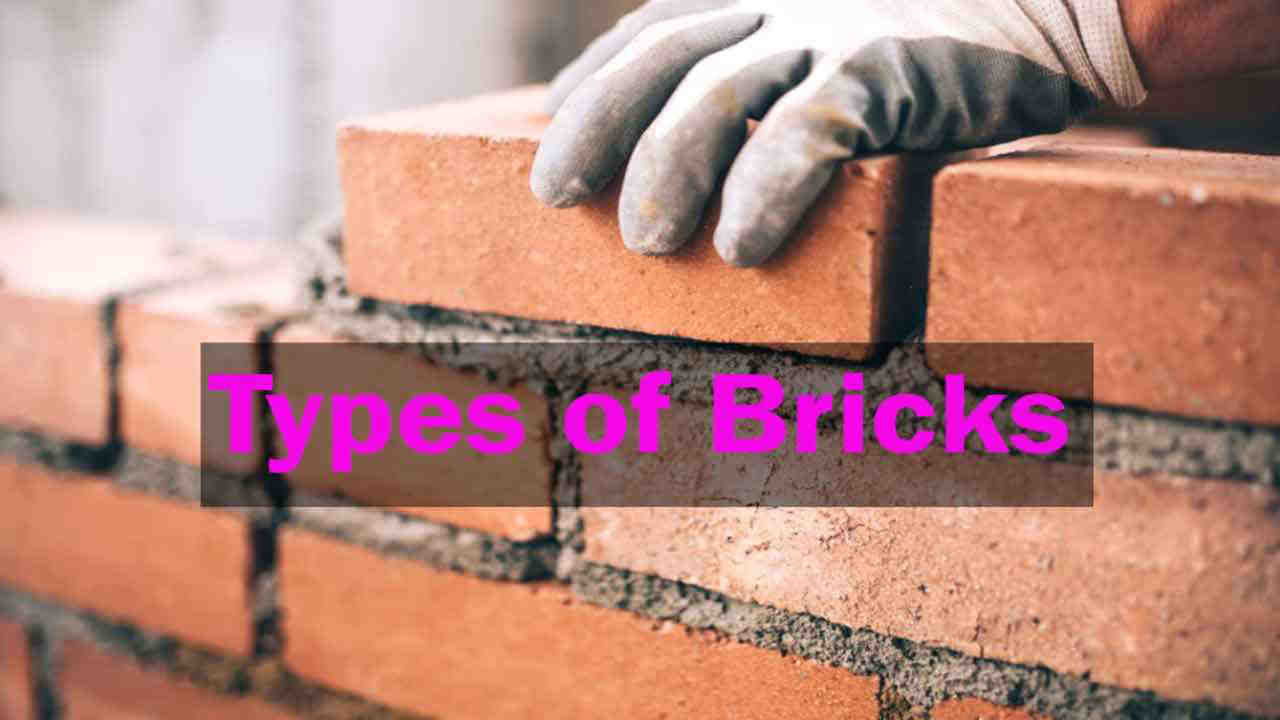
Types Of Bricks Used For Indian Construction Know More, The foundation has to be always strong and that’s why the bricks that are used in construction of property for sale has to be the best. Bricks are the most fundamental for construction, and they are often the core of most of the construction.
In these modern days, types of bricks used in building construction have become more refined, with better strength and stability, all at a lower cost.
So, are you sure that you are using the right brick for your dream home? Let’s have a detailed discussion in this blog about the advantages, disadvantages and types of bricks.
Read Also: Godrej Buy 33 Acre of Land in Bannerghatta Road Bangalore
Read Also: Loan Against Property In Noida
What Are The Advantages Of Bricks Used For Construction?
Bricks constructing are long lasting and durable as it is fireproof and can withstand exposure to high temperatures.
Against the changing environment Brick does not require the application of protected paints. Issues with individual bricks can be addressed without the need to bring down and rebuild the entire structure. The cost of shipment is quite low as the readily available clay helps in bricks being able for local creation. This can mean that construction using brick as a material may be less expensive than using stone, concrete, or steel.
Read Also: DLF One Midtown
Read Also: Top 10 Best Luxury Apartments in Noida
What Are The Disadvantages Of Bricks Used For Construction?
• Brick Construction is a Time-consuming process.
• Under high seismic pressure, it can break.
• Since bricks absorb water readily, it may cause a lack of airflow.
• Less tensile strength.
• It is a hard job to clean the brick surfaces.
Read Also:- Top 10 Best Residential Projects in Gurgaon
Read Also:- Top 10 Best Residential Projects in Mumbai
Types Of Bricks Used In Construction
1. Sun-Dried Bricks
Sundried bricks are also known as Unburnt bricks and they are the first and most basic example of bricks. The name itself describes the process of making it as they are not burnt but dried in the sun for hardening. They are mostly used in in rural areas or temporary constructions as they are not so strong. Also, have reduced fire and water resistance, and hence is best when left to temporary structures in our list for types of bricks used on construction.
Read also: Top 10 Best Luxury Apartments in Gurgaon
Read Also: Buy Residential and Commercial Property in Noida
2. Burnt Clay bricks
These are the common bricks that are mostly used in construction and are used in the construction of important structures such as columns, walls, and the foundation of the building.
There are mainly four types
• First-class bricks (best quality bricks)
• Second class bricks (moderate quality)
• Third class bricks (poor quality)
• Fourth class bricks (over-burnt and in irregular shape)
Read Also: TVS Emerald Singasandra Bangalore
Read Also: Godrej Pimpri Chinchwad Pune
3. Fly Ash Bricks
Fly Ash bricks are used for building material and it contains class C or class F fly ash, which is a by-product that we get from burning coal mixed with water, which is then fired at a 1000 degree Celsius. The high amount of calcium oxide makes class C fly ash make it the best among the types of bricks used in construction for pillars, foundation, and walls. And it is often referred to as “self-cementing” brick.
These bricks are high fire insulation, high strength, uniform sizes for better joints and plaster and lower water penetration.
Read Also: TARC Kirti Nagar Delhi
Read Also: Top 10 Best Luxury Apartments in Pune
Read Also: Top 10 Best Luxury Apartments in Mumbai
Read Also: M3M Projects in Gurgaon
4. Concrete Bricks
These bricks are manufactured using concrete with ingredients as cement, sand, and water. Concrete bricks can be readily manufactured at a construction site as per the size and requirement. This can also help in the reduction of the amount of mortar required for the construction itself. Another common and rather popular type of brick used in construction.
Read Also: ATS Homekraft Rohini Delhi
Read Also: Max Sector 128 Noida
Read Also: Godrej Woodsville
Read Also: Paras Floret
5. Engineering Bricks
Engineering bricks are especially used for its strength, cold resistance, and fire resistance making them the most durable. Most used for basements, where chemical and water resistance is required more than average. They are also known for their low porosity.
6. Sand Lime Bricks
Sand Lime Bricks are made using sand and lime as the name itself suggests. These bricks are used in the construction sector for several purposes and one of the primary types of bricks used in India. Commonly they are more in use for Artistic works, including ornamental works in buildings with smooth texture, acoustic insulation and have excellent fire resistance.
7. Fire Bricks
Fire Bricks are also knows as the refractory bricks and they are manufactured from a specially designed earthing process. There is a complete process where after it is burned; it can withstand extremely high temperatures through its fire resistance properties. And it won’t effect the desires, shape, size, and compromising strength. Therefore, it is one of the common types of bricks used in India, especially in the rural and dry regions. This is used for the lining of chimney and furnaces where the temperature rates are usually extremely high.
Read Also: Smart World Sector 111 Gurgaon
Read Also: L and T Sector 150 Noida
Read Also: M3M Sector 111 Gurgaon
8. Jhama Bricks
Another name for Jhama Bricks is ‘overburnt bricks” or the ‘vitrified brick as it is fired at a high temperature and for a longer duration of time compared to conventional bricks. These bricks have the strength higher or equivalent standard to first-class bricks as it has a higher absorption capacity. Often used in slab and beam construction using concrete where it does not encounter water normally.
9. Hollow Bricks
Read Also: M3M Sector 79 Gurgaon
Read Also: Smart World Sector 79 Gurgaon
Read Also: Birla Sector 150 Noida
Read Also: M3M Sector 128 Noida
Hollow bricks are descriptive by the names itself as they are hollow inside and these bricks are also called cellular or cavity bricks. For the quick construction these bricks are used extensively as they can be laid much quicker than the normal ones. These bricks are also used in partitioning in the construction process.
Thus, the developer chooses the brick as per the requirements while keeping in mind the safety of its buyers. A strong foundation will lead to a great construction for life.
Read Also: - Top 10 Best Residential Projects in Pune
Read Also:- Top 10 Best Residential Projects in Kharadi
Read Also: - Top 10 Best Residential Projects In Undri
Read Also: - Top 10 Best Residential Projects in Wagholi
Read Also: - Top 10 Best Residential Projects In Bangalore
Read Also: - Top 15 Best Residential Projects In Gurgaon
Read Also: Top 10 Best Residential Projects In Noida Extension
Read Also: - Top 10 Best Residential Projects In Sector-150 Noida
Read Also:- Top 10 Best Residential Projects in Noida
Read Also:- Top 10 Best Residential Projects in Wakad
Read Also:- Top 10 Best Residential Projects in Bavdhan
Read Also:- Top 10 Best Residential Projects in Nibm
Read Also:- Top 10 Best Residential Projects in Talegaon
Read Also:- Top 10 Best Low Rise Apartments in Gurgaon
Read Also:- Top 10 Best Residential Projects in Mamurdi
Read also: Top 10 Best Commercial Property in Noida
Read Also: Top 10 Best Luxury Villas in Noida
Read Also: Top 5 Best Luxury Projects in Delhi
Read Also: Top 10 Best Luxury Projects in Bangalore
Read Also: Top 10 Best Luxury Projects in Gurgaon
Read Also: Top 10 Best Residential Projects In Chennai
Read Also: Top 10 Best Residential Projects in Dwarka Expressway Gurgaon
Read Also : Assetz Group Property Bangalore Real Estate Developer And Builder
Related Articles
Types Of Building Plans How To Design, Advantages
Types Of Building Plans How To Design, AdvantagesBuilding blueprints offer an image of how a structure will look when it is finished. Contractors and

What are Home Buyers expecting from Modi Government’s Maiden Budget?
What Are Home Buyers Expecting From Modi Government’s Maiden Budget?Expecting the now-fabled "achche din," homebuyers had high hopes for the first bud

Why are smart homes gaining popularity
Why Are Smart Homes Gaining Popularity?Technology is gradually permeating the nation's housing industry. The modern home buyer is becoming more and mo

Master Plan - What is it, Importance, Advantage & How it is made
Master Plan - What Is It, Importance, Advantage & How It Is Made?The city's long-term plans are called master plans. They therefore need to be com