Ready To Move Vs Under Construction?
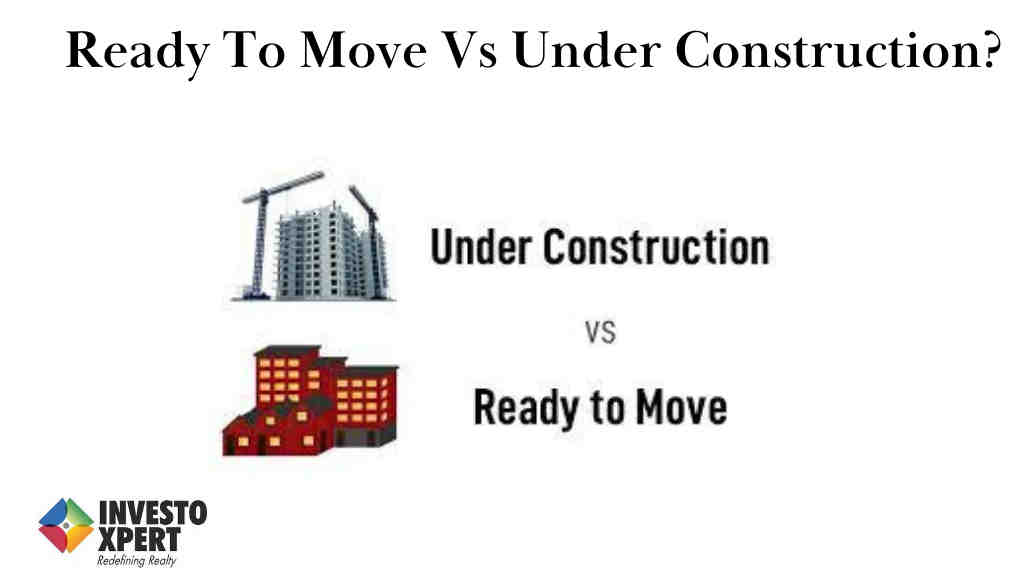
Homebuyers typically have a choice between Ready To Move Vs Under Construction when making a purchase. It is essential to be aware of the benefits and drawbacks of both of these property categories in advance because they serve and fit various purposes and intents with various tax implications.
Here is a comprehensive decision-making guide.
Even while buying a luxury apartment or an affordable home while it's still being built is now among the simplest ways to own a property, there are still certain risks, such as delayed possession.
Due to the ongoing project delivery delays over the past few years, buyers of homes have begun to favor ready apartments more and more. Is one type of the property is superior to the other type of the property, though? In the blog that follows, let's examine the benefits and drawbacks of a ready and under-construction property.
What are the Advantages Of Purchasing An Under Construction Building?
Easy on Pocket Type Of Property
An under-construction property is not as bad for a buyer's pocketbook as a ready-to-move-in home is at the time of purchase. A ready-to-move-in property is likely to cost more than one that is still being built, provided that other parameters like location, amenities, property size, and builder are the same.
Greater Profits
Buying a home while it is still being built often yields a higher return on investment because there is more time between the purchasing stage and the delivery timeline. You have a strong possibility of making back your capital investment if you sell the property quickly after buying it.
Compliant with RERA
Any property that held an Occupancy Certificate as of May 1, 2017, was required to register with the RERA of the applicable State. Therefore, properties that are still being built must adhere to fair trade principles and be governed by RERA. Purchasers can get information about these properties on the State's RERA website and even ask the Appellate Tribunal formed under RERA to resolve their grievances quickly.
What Are The Advantages Of A Ready To Move Property?
- Availability today
One of the primary advantages of a ready unit is the ability to take ownership immediately. Before moving in, homebuyers must make the payment and finish the paperwork. In the event of a home loan, this also relieves them of the additional strain of having to pay both rent and the Equated Monthly Instalments (EMI) at the same time.
- You Receive What You See
Those who buy a ready-to-move-in unit get to see the finished product and get what they paid for. There are fewer chances of differences with the claimed layout, features, and facilities, among other crucial things, because the unit is prepared for you to examine before you finalize the purchase.
- Free from GST Implication
The Goods and Services levy (GST) assesses a levy of up to 5% on the purchase of properties that are still under construction. However, there is no on ready-to-move-in properties.
What Are The Disadvantages Of An Under Construction Building?
- Greater Risk
Investing in a project that is still under development carries a significant amount of risk. On rare occasions, the builder has delivered late or, in more severe cases, never at all. This can be attributed to a variety of issues, including a lack of funding, rising building supply costs, and rising borrowing rates, among others. So, before making an investment in a project that is still in the development stages, it is advisable to do your homework on the builder.
- Inconsistency in the final product's design or features
The risk of not getting the promised product upon taking possession is one of the most common issues with residences that are still being built. A plan change, a smaller usable area than promised, and a dearth of amenities are examples of frequent inconsistencies.
- The impact of GST
When buying a property that is still being developed, a tax incidence of one to five percent of the property's total cost is charged. Affordable residences valued under Rs 45 lakh are subject to a one percent GST fee; whereas, properties priced over Rs 47 lakh are subject to a five percent GST charge. Such assets result in significant tax expenditures due to additional stamp duty and registration fees.
- Tax implications
Buyers generally employ loans connected with particular tax advantages under Sections 24, 80EE, and 80C of the Income Tax Act to finance their real estate transactions. Only properties that are ready to move into are eligible once the buyer has taken possession and the benefits under these rules have taken effect. Tax benefits on interest paid while a property was being built are granted in five equal instalments beginning with the year of possession.
There is a catch, though. If the building is finished and the homeowner moves in, the interest paid on a house loan for a self-occupied property is tax deductible up to Rs 2.5 lakh within three years of getting the loan. Only tax benefits up to Rs 30,000 can be claimed if the construction is not finished within five years.
These conditions only apply if the property's owner lives there. There are no limitations on the amount of interest deduction in the event that the owner choose to rent it out or leave it vacant (deemed let out). There is no provision for the borrower to claim any refund for the principle amount in terms of the tax exemption if the entire amount is paid before taking possession.
People who take out home loans for under-construction building run the danger of losing out on the tax benefits because project delays are now very regular.
What Are The Disadvantages Of A Ready To Move In Property?
- High price
The increased cost compared to a property that is still being built is one of the most evident disadvantages of purchasing a ready-to-move flat. Because these homes can be completed rapidly, builders can charge more for them.
- The Level Of Craftsmanship
Homebuyers have the opportunity to periodically examine the construction quality when purchasing a property that is still under construction by analyzing the work in progress. Buyers can check the quality of the materials, the stability of the foundation, and the structural integrity, among other crucial aspects.
- The property's age
Buying a ready unit does not always guarantee you a brand-new home, unlike buying a house that is currently being built. Consequently, if it hasn't been properly maintained, it may have problems like seepage, harmed walls, and rusted iron fixtures, to name a few.
- Being exempt from RERA
The inclusion of older ready units with Occupancy Certificate as of 1 May 2016 is not required under RERA. Thus, the proponents of the material are not compelled to make it available on a public platform. This raises concerns about how complaints are handled and the seller's accountability in the event of any irregularities.
- Capital gains tax
If you want to purchase an under-construction property by liquidating an existing asset, the construction of that property must be finished three years after the sale of the existing asset. The Long Term Capital Gains (LTCG) on the sold property are taxed at 20% together with the payment of cess and surcharge if the building takes longer than three years.
Capital gains on the sale of a property held for more than two years are exempt from taxation, according income tax legislation. It only applies if the proceeds are utilized to purchase further real estate within two years, invest in a home purchased one year prior to the sale of the asset, or construct a home within three years.
The Ready To Move Vs Under Construction have their own sets of pros and cons, homebuyers must evaluate them thoroughly. To make the best financial option, the property's needs and purpose must be assessed.
So, Are You Ready To Move or buy an under-construction property and wait! The decision is all yours… Happy Investing!!!
Read Also : Top 10 Best Luxury Apartments in Kochi
Read Also : Top 10 Best Luxury Apartments in Lucknow
Read Also : Top 10 Best Affordable Housing Project in Goa
Read Also : Top 10 Best Affordable Housing Project in Lucknow
Read Also : Top 10 Best Affordable Housing Project in Ghaziabad
Read Also : Top 10 Best Affordable Housing Project in Ahmedabad
Read Also : Top 10 Best Affordable Housing Project in Hyderabad
Read Also : Top 10 Best Affordable Housing Project in Bangalore
Read Also : Top 10 Best Affordable Housing Project in Mumbai
Read Also : Top 10 Best Affordable Housing Project in Chennai
Read Also : Top 10 Best Affordable Housing Project in Bhopal
Read Also : Top 10 Best Affordable Housing Project in Chandigarh
Read Also : Top 10 Best Luxury Apartments in Delhi
Read Also : Top 10 Best Affordable Housing Project in Kochi
Read Also : Top 10 Best Affordable Housing Project in Kolkata
Read Also : Top 10 Best Luxury Apartments in Faridabad
Read Also : Top 10 Best Commercial Property in Gurgaon
Read Also : Top 10 Best Commercial Property in Faridabad
Read Also : Top 10 Best Commercial Property in Mumbai
Read Also : Top 10 Best Commercial Project in Pune
Read Also : Top 10 Best Commercial Property In Delhi
Read Also : Top 10 Best Commercial Property in Ghaziabad
Read Also : Top 10 Best Luxury Villas in Mumbai 2023
Read Also : Top 10 Best Luxury Villas in Chennai
Read Also : Top 10 Best Luxury Villas in Bangalore
Read Also : Top 10 Best Luxury Villas in Gurgaon
Read Also : Top 10 Best Luxury Villas in Pune
Read Also : Top 10 Best Luxury Villas in Hyderabad
Read Also : Top 10 Best Luxury Villas in Lucknow
Read Also : Top 10 Best Luxury Villas in Chandigarh
Read Also : Top 10 Best Commercial Property in Chandigarh
Read Also : Top 10 Best Commercial Property in Bangalore
Read Also : Top 10 Best Commercial Property In Chennai
Read Also : Top 10 Best Commercial Property In Ahmedabad
Read Also : Top 10 Best Commercial Property in Hyderabad
Read Also : Top 10 Best Commercial Property in Kolkata
Read Also : Top 10 Best Commercial Property in Lucknow
Read Also : Top 10 Best Commercial Property in Bhopal
Read Also : Top 10 Best Luxury Villas in Ghaziabad
Read Also : Top 10 Best Luxury Villas in Ahmedabad
Read Also : Top 10 Best Luxury Villas in Delhi
Read Also : Top 10 Best Luxury Villas in Kolkata
Read Also : Top 10 Best Commercial Property in Kochi
Read Also : Top 10 Best Commercial Property In Goa
Read Also : Top 10 Best Villas in Noida Extension
Read Also : Top 10 Interior Designers In Ghaziabad
Read Also : Top 10 Interior Designers In Ahmadabad
Read Also : Top 10 Interior Designers in Chandigarh
Read Also : Top 10 Interior Designers In Kochi
Read Also : Top 10 Interior Designers In Lucknow
Read Also : Top 10 Interior Designers in Faridabad
Read Also : Top 10 Interior Designer In Goa
Read Also : Top 10 Interior Designers In Bangalore
Read Also : Top 10 Interior Designer In Kolkata
Read Also : Top 10 Interior Designers In Chennai
Read Also : Top 10 Interior Designers In Bhopal
Read Also : Top 10 Best Interior Designers in Mumbai
Read Also : Top 10 Interior Designers In Hyderabad
Read Also : Top 10 Interior Designers in Pune
Read Also : Top 10 Interior Designers in Thane
Read Also : Top 10 Best Lowrise Apartments In Noida
Read Also : Top 10 Best Lowrise Apartments In Ghaziabad
Read Also : Top 10 Best Lowrise Apartments in Chennai
Read Also : Top 10 Best Low-rise Apartments In Ahmedabad
Read Also : Top 10 Best Low-Rise Apartments In Bangalore
Read Also : Top 10 Best Low-Rise Apartments In Mumbai
Read Also : Top 10 Best Lowrise Apartments In Hyderabad
Read Also : Top 10 Best Low-Rise Apartments In Bhopal
Read Also : Top 10 Best Low-Rise Apartments In Faridabad
Read Also : Top 10 Best Low-Rise Apartments In Lucknow
Read Also : Top 10 Best Low-Rise Apartments In Pune
Read Also : Top 10 Best Low-rise Apartments In Navi Mumbai
Read Also : Top 10 Best Low-Rise Apartments In Chandigarh
Read Also : Top 10 Best Ready To Move Flats In Gurgaon
Read Also : Top 10 Best Ready To Move Flats In Noida
Read Also : Top 10 Best Ready To Move Flats In Pune
Read Also : Top 10 Best Ready To Move Flats In Mumbai
Read Also : Top 10 Best Ready To Move Flats In Chennai
Read Also : Top 10 Best Ready To Move Flats In Delhi
Read Also : Top 10 Best Ready To Move Flats In Chandigarh 2023
Read Also : Top 10 Best Ready To Move In Apartments In Hyderabad 2023
Read Also : Top 10 Best Ready To Move Apartments In Lucknow
Read Also : Top 10 Best Ready To Move In Apartments In Thane 2023
Read Also : Top 10 Best Under Construction Projects In Bangalore 2023
Read Also : Top 10 Best Under Construction Projects In Noida 2023
Read Also : Top 10 Best under construction projects in Delhi 2023
Read also:- The Rise of Sustainable Living: Eco-Friendly Homes in India
Read also:- What legal points should you check while buying a property?
Read also:- Know about the Stilt Houses In Details
Read also:- Things to Explore about DDA Housing Scheme 2021
Read also:- Real Estate Trends to witness in 2021
Read also:- Best Time to Upgrade Your Home – With InvestoXpert
Read also:- Things to explore when you are planning for the Smart Home Investment
Read also:- Opting For The Project Amenities In Real Estate Is Trending
Read also:- Invest in The Best Residential Project in Pune To Get Good Returns
Read also:- How Many Bigha in 1 Acre in in India - Up-Asaam Need To Know More
Read also:- Important Points For Buying Property Online
Related Articles
Types Of Building Plans How To Design, Advantages
Types Of Building Plans How To Design, AdvantagesBuilding blueprints offer an image of how a structure will look when it is finished. Contractors and

What are Home Buyers expecting from Modi Government’s Maiden Budget?
What Are Home Buyers Expecting From Modi Government’s Maiden Budget?Expecting the now-fabled "achche din," homebuyers had high hopes for the first bud

Why are smart homes gaining popularity
Why Are Smart Homes Gaining Popularity?Technology is gradually permeating the nation's housing industry. The modern home buyer is becoming more and mo

Master Plan - What is it, Importance, Advantage & How it is made
Master Plan - What Is It, Importance, Advantage & How It Is Made?The city's long-term plans are called master plans. They therefore need to be com