Landlord's Guide Rental Property Management In India
Property Management in India these days, can be very profitable because of the rising demand for real estate and the expansion of the middle class.
While renting out your property or a portion of it may be financially advantageous, there are also a number of obligations involved. A significant number of elderly people have started renting out their homes as a developing trend to assist them financially. Even while renting is a smart move, especially for the elderly, they are more vulnerable to scams, problems with tenants, and other issues.
Who Is a Landlord?
The term "landlord" describes a person who owns property and rents or leases it to another person in return for rent payments. Landlords may be people, businesses, or other types of organizations. The tenant or leaseholder is often responsible for maintaining the property clean and in excellent shape. During the rental period, the landlord typically pays for any necessary maintenance or repairs. A lease agreement often specifies the particular responsibilities and obligations of each party.
What Are The Duties Of A Landlord?
A landlord is anybody who owns real estate and leases it to others. The renter or leaseholder is this party. Real estate is a source of financial gain for landlords. A landlord who owns rental property might benefit from the potential for property appreciation as well as a reliable stream of income. They have to move according to the rental market trends in India.
Who Can Be A Landlord?
Landlords can be people, companies, or other types of organizations, such governments. The kinds of properties they own can differ similarly. That implies that they own a variety of real estate, not simply houses. Their real estate holdings could also contain the following:
- Apartment complexes, condominiums, and multi-family homes are examples of multi-family residential dwellings.
- Land and vacant spaces
- Villas and cottages used as vacation homes
- Commercial assets, including independent businesses, malls, offices, and mixed-use structures
What Are The Advantages Of Being A Landlord In Property Management In India?
There are various advantages of being a landloard as they can use leverage in the property purchase, costs that are tax deductible, Stream of Income Appreciation Potential and many more.
What are the Limitations on a Landlord's Rights?
Landlords are generally prohibited from doing the following four things:
Discrimination: Because of the Fair Housing Act, it is against the law for landlords to refuse a tenant a lease on the basis of their race, color, national origin, sexual orientation, familial status, gender, or handicap.
Entry without permission: Landlords are not permitted to enter a property without prior notice unless there is an emergency, such as a fire or leak. State laws differ, but many mandate at least a 24-hour notice.
Evict tenant incorrectly: A landlord may evict a tenant for a number of reasons, but they must always follow the correct legal procedures. Landlord is placed in a risky legal situation if proper process is not followed.
Increase rents without notice: Landlords must provide adequate notice (usually at least 30 days) before raising a tenant's rent. Additionally, state-specific rent control regulations may forbid landlords from increasing rents above a certain threshold, even while the lease is up for renewal.
How To Look For Rental Properties?
It might take just as much effort, thought, and time to find a Rental Property as it does to buy one. Here are six choices to get you started in your search for a house or apartment. You have a lot of options on where to start your search.
- Ask family, friends, and neighbours
- Use rental listing sites
- Speak with real estate agents
- Look through the online publications or social media
- Check out your desired neighbourhoods
- Search for long-term rentals on vacation rental sites
List Of rules and regulations for the Landlord
Here is a list of steps to take before discovering the rental property. Both senior people and those who are renting their first house would benefit from the list.
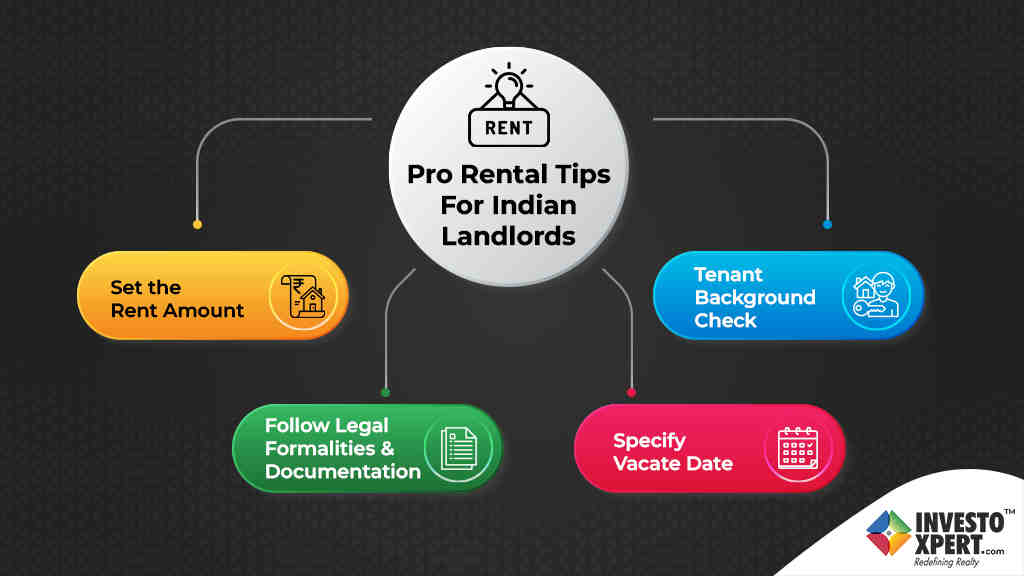
Fixing the Rent: Before renting out the unit, the home renter must incorporate the correct computation for the desired rent. When members of housing societies rent out their units to renters, some housing societies charge the tenants an annual fee in exchange for the use of the facilities. Housing apartment rents should, in a perfect world, range from 2 to 3 percent of the flat's annual capital value. However, depending on the services offered and the location of the housing society, rent varies from place to place. Another option is to use a broker, who may assist landowners in obtaining a reasonable rental rate.
Background Check: One of the most crucial steps in finding the ideal tenant for your rental property is to obtain a background check on the prospective tenant. Some housing societies have clear rules for tenants, such as not letting married couples live there. Before selecting a tenant, it is essential to review the housing society guidelines.
To quickly assess a prospective tenant's personality attributes, one can also conduct a history check with his or her previous jobs. Additionally, it is advised to preserve a copy of the tenant's various identification cards and give them to the police, which is required in many urban areas.
Follow all Legal Procedures and Paperwork: It is advised to prepare a proper legal rent document with the assistance of a qualified legal expert. Before any possession is granted, all parties must sign the rent agreement with all terms and conditions and have it verified by the police. Roles and due dates for tenant payments must be specified in the rent agreement.
To avoid any complexities or misunderstandings, it must be clearly stated in the agreement whether the tenant is responsible for paying their own power and water bills.
Have a Well Defined Vacating Period: A specific vacating provision must be signed by both sides in the event of an emergency, whether the landlord needs possession back before the normal rent agreement time limit or the tenant wants to depart. If one party wants to end the lease, they must give the other party a three- to six-month advance notice after reaching an amicable agreement. Such a sub clause allays any unfounded worries that the landowner and the renter may have had.
After reading this blog, you know about the landlord, their duties, how to look for rental properties and a complete guide for property management in India.
So, before the tenant is shifting to rental property there are many things to notice and understand. Happy searching!!!
Read Also : Top 10 Best Luxury Apartments in Kochi
Read Also : Top 10 Best Luxury Apartments in Lucknow
Read Also : Top 10 Best Affordable Housing Project in Goa
Read Also : Top 10 Best Affordable Housing Project in Lucknow
Read Also : Top 10 Best Affordable Housing Project in Ghaziabad
Read Also : Top 10 Best Affordable Housing Project in Ahmedabad
Read Also : Top 10 Best Affordable Housing Project in Hyderabad
Read Also : Top 10 Best Affordable Housing Project in Bangalore
Read Also : Top 10 Best Affordable Housing Project in Mumbai
Read Also : Top 10 Best Affordable Housing Project in Chennai
Read Also : Top 10 Best Affordable Housing Project in Bhopal
Read Also : Top 10 Best Affordable Housing Project in Chandigarh
Read Also : Top 10 Best Luxury Apartments in Delhi
Read Also : Top 10 Best Affordable Housing Project in Kochi
Read Also : Top 10 Best Affordable Housing Project in Kolkata
Read Also : Top 10 Best Luxury Apartments in Faridabad
Read Also : Top 10 Best Commercial Property in Gurgaon
Read Also : Top 10 Best Commercial Property in Faridabad
Read Also : Top 10 Best Commercial Property in Mumbai
Read Also : Top 10 Best Commercial Project in Pune
Read Also : Top 10 Best Commercial Property In Delhi
Read Also : Top 10 Best Commercial Property in Ghaziabad
Read Also : Top 10 Best Luxury Villas in Mumbai 2023
Read Also : Top 10 Best Luxury Villas in Chennai
Read Also : Top 10 Best Luxury Villas in Bangalore
Read Also : Top 10 Best Luxury Villas in Gurgaon
Read Also : Top 10 Best Luxury Villas in Pune
Read Also : Top 10 Best Luxury Villas in Hyderabad
Read Also : Top 10 Best Luxury Villas in Lucknow
Read Also : Top 10 Best Luxury Villas in Chandigarh
Read Also : Top 10 Best Commercial Property in Chandigarh
Read Also : Top 10 Best Commercial Property in Bangalore
Read Also : Top 10 Best Commercial Property In Chennai
Read Also : Top 10 Best Commercial Property In Ahmedabad
Read Also : Top 10 Best Commercial Property in Hyderabad
Read Also : Top 10 Best Commercial Property in Kolkata
Read Also : Top 10 Best Commercial Property in Lucknow
Read Also : Top 10 Best Commercial Property in Bhopal
Read Also : Top 10 Best Luxury Villas in Ghaziabad
Read Also : Top 10 Best Luxury Villas in Ahmedabad
Read Also : Top 10 Best Luxury Villas in Delhi
Read Also : Top 10 Best Luxury Villas in Kolkata
Read Also : Top 10 Best Commercial Property in Kochi
Read Also : Top 10 Best Commercial Property In Goa
Read Also : Top 10 Best Villas in Noida Extension
Read Also : Top 10 Interior Designers In Ghaziabad
Read Also : Top 10 Interior Designers In Ahmadabad
Read Also : Top 10 Interior Designers in Chandigarh
Read Also : Top 10 Interior Designers In Kochi
Read Also : Top 10 Interior Designers In Lucknow
Read Also : Top 10 Interior Designers in Faridabad
Read Also : Top 10 Interior Designer In Goa
Read Also : Top 10 Interior Designers In Bangalore
Read Also : Top 10 Interior Designer In Kolkata
Read Also : Top 10 Interior Designers In Chennai
Read Also : Top 10 Interior Designers In Bhopal
Read Also : Top 10 Best Interior Designers in Mumbai
Read Also : Top 10 Interior Designers In Hyderabad
Read Also : Top 10 Interior Designers in Pune
Read Also : Top 10 Interior Designers in Thane
Read Also : Top 10 Best Lowrise Apartments In Noida
Read Also : Top 10 Best Lowrise Apartments In Ghaziabad
Read Also : Top 10 Best Lowrise Apartments in Chennai
Read Also : Top 10 Best Low-rise Apartments In Ahmedabad
Read Also : Top 10 Best Low-Rise Apartments In Bangalore
Read Also : Top 10 Best Low-Rise Apartments In Mumbai
Read Also : Top 10 Best Lowrise Apartments In Hyderabad
Read Also : Top 10 Best Low-Rise Apartments In Bhopal
Read Also : Top 10 Best Low-Rise Apartments In Faridabad
Read Also : Top 10 Best Low-Rise Apartments In Lucknow
Read Also : Top 10 Best Low-Rise Apartments In Pune
Read Also : Top 10 Best Low-rise Apartments In Navi Mumbai
Read Also : Top 10 Best Low-Rise Apartments In Chandigarh
Read Also : Top 10 Best Ready To Move Flats In Gurgaon
Read Also : Top 10 Best Ready To Move Flats In Noida
Read Also : Top 10 Best Ready To Move Flats In Pune
Read Also : Top 10 Best Ready To Move Flats In Mumbai
Read Also : Top 10 Best Ready To Move Flats In Chennai
Read Also : Top 10 Best Ready To Move Flats In Delhi
Read Also : Top 10 Best Ready To Move Flats In Chandigarh 2023
Read Also : Top 10 Best Ready To Move In Apartments In Hyderabad 2023
Read Also : Top 10 Best Ready To Move Apartments In Lucknow
Read Also : Top 10 Best Ready To Move In Apartments In Thane 2023
Read Also : Top 10 Best Under Construction Projects In Bangalore 2023
Read Also : Top 10 Best Under Construction Projects In Noida 2023
Read Also : Top 10 Best under construction projects in Delhi 2023
Read also:- The Rise of Sustainable Living: Eco-Friendly Homes in India
Read also:- The Rise of Sustainable Living: Eco-Friendly Homes in India
Read also:- Interior Design Trends Transforming Indian Homes: Expert Insights
Read also:- ROI In Real Estate: Analysing Returns And Profits For Indian Investors
Read also:- Navigating Legalities: Essential Guidelines For Property Buyers In India
Read also:- Rental Market Trends in India: How to Make the Most of Your Investment?
Read also:- The Power of Virtual Reality in The Real Estate Business
Read also:- Mistakes to Avoid While Dealing in a Property
Read also:- Real Estate Trends That Will Rule in 2022
Read also:- RERA - All You Need To Know About Rera Gujarat Before Buying A House In 2023!
Read also:- Top 9 Amenities You Must Have In Apartments
Read also:- Luxury Living: Exploring High-End Residential Properties In India
Read also:- Top 5 Benefits Of Investing In Ready-To-Move Flats In Noida Expressway
Read also:- India’s Real Estate Boom: Economic Growth, And Investment Opportunities
Read also:- How To Choose The Right Location For Your Dream Home In India?
Related Articles

Types Of Building Plans How To Design, Advantages
Types Of Building Plans How To Design, AdvantagesBuilding blueprints offer an image of how a structure will look when it is finished. Contractors and

What are Home Buyers expecting from Modi Government’s Maiden Budget?
What Are Home Buyers Expecting From Modi Government’s Maiden Budget?Expecting the now-fabled "achche din," homebuyers had high hopes for the first bud

Why are smart homes gaining popularity
Why Are Smart Homes Gaining Popularity?Technology is gradually permeating the nation's housing industry. The modern home buyer is becoming more and mo

Master Plan - What is it, Importance, Advantage & How it is made
Master Plan - What Is It, Importance, Advantage & How It Is Made?The city's long-term plans are called master plans. They therefore need to be com