High-Rise Building: Everything You Need To Know
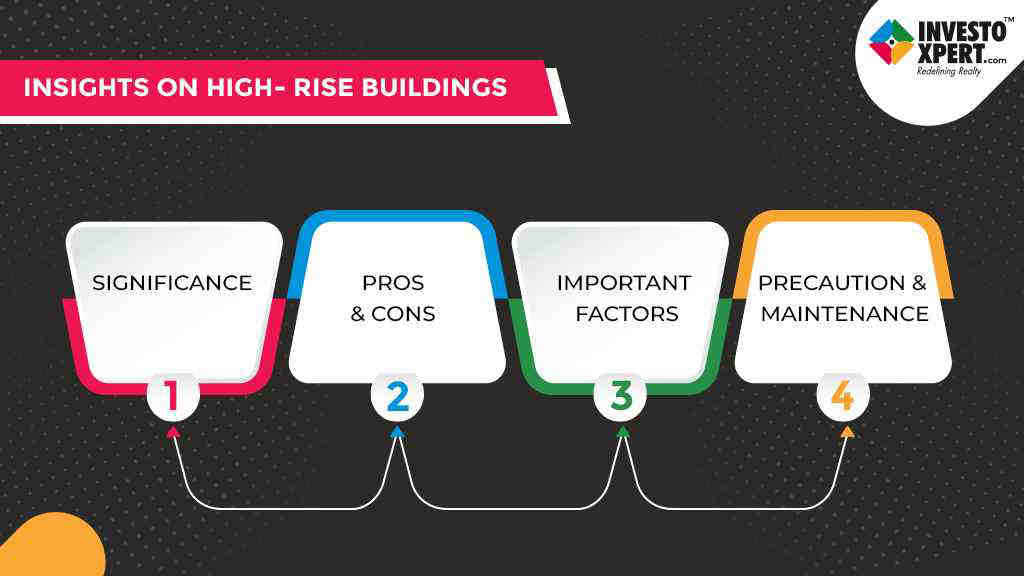
High Rise Building are the only way to relocate everyone under one secure roof.
As the population is expanding quickly, the available land is not doing so. High-rise structures are currently being built in India and many other nations to address the housing shortage and serve commercial needs.
There are certain advantages to building high rises as well as some disadvantages. Among the working professionals of the younger age, high-rise buildings are quite popular. Concerns about privacy on upper floors are also profitable. Less pollution is another important benefit of high rises in addition to these. Learn more in this piece.
What is a High Rise Building In India?
Any architectural construction that is taller than 75 feet is referred to as a high-rise in real estate. A building with more than four floors often has two elevators. Similar to this, a structure with more than seven stories needs a reliable fire suppression system.
These days, there is a significant demand for high-rise structures due to the flood of individuals coming to major cities in search of rewarding professional opportunities. This makes it simple for many people to move to the metropolis in search of a higher quality of life.
Why Is It Significant To Live In The High-Rise Building?
The biggest advantage of high-rise living is that you get unrestricted views of the surroundings. It offers good fresh air ventilation, is removed from street pollution, and provides excellent natural ventilation. Homes on higher floors feel more open and spacious, have more natural light, and don't have any of the traffic that comes with living in a low-rise structure.
In addition, high-rises are frequently found in affluent areas with improved connection and security. First-time homeowners looking for an affordable component on the upper levels are especially drawn to high-rise residences.
City planners are planning to house as many families as possible at once due to the rush of individuals relocating to metro areas in quest of a better living and job prospects.
What Are The Pros And Cons Of High-Rise Building?
High Rise Building have both advantages and disadvantages, might be both profitable and risky at the same time. The benefits and drawbacks of a high-rise building are listed here.
High-Rise Buildings: Benefits
- The finest location for a quiet setting can be found in a high-rise building. The main advantages of a high-rise building include good air quality, enough ventilation, etc.
- The highrise building's calm beauty is astounding.
- High-rise buildings frequently have a solid security system that deters attackers, and the more floors there are, the greater the amount of privacy is present.
- Elevator systems in high-rise structures are often good.
High-rise buildings: Drawbacks
- It may be difficult to evacuate quickly in the event of an emergency, such as a fire or earthquake.
- High-rise structures are highly expensive when compared to other types of buildings.
- Exterior maintenance is expensive and difficult.
- High-rise structures are vulnerable to damage, particularly during an earthquake.

What Are The Things to remember before investing in a high-rise building?
When a structure is constructed by a real estate business, it is impossible for a homebuyer to independently verify all the specifics. However, you can immediately verify a few things as per your own responsibilities.
- Exposure To The Environment
The benefits of living on a higher floor include more natural light and improved ventilation. It also means that you will be exposed to the elements more. The excessive sunlight during the sweltering summer can turn your house into an oven, and the severe winters bring cold drafts that might necessitate adding more heat. Monsoon season increases the likelihood of internal damage and seepage, particularly if the structure is improperly insulated and waterproofed.
- Increased Use Of Electricity
An upper-floor residence's comfort frequently comes at the expense of increased electricity costs. You'll find yourself depending more on air conditioning and heating systems than your peers on lower floors to fend off the summer heat or the winter chill. As a result, your monthly electricity costs may be much higher than those of people who live on the first or second floor.
- Accessibility
Another aspect to take into account is accessibility. Residents at lower floors appreciate the convenience of gaining access right away without having to wait for elevators. This can be especially helpful when there are power outages, which frequently occur in many Indian cities. On the other hand, getting to your flat on Highest Floor Building In India could take longer and need more effort.
- Value at sale
It's important to keep in mind that upper-floor houses could not maintain the same resale value as their lower-floor equivalents when considering long-term investments. Families and senior folks, who frequently favor accessibility, may not be very interested in upper-floor apartments. Due to the lower demand, it could be harder to sell your home on the high floor of Skyscraper Building In India and you might have to wait longer to find a buyer.
- Potential rentals
There are differences in rental preferences by city in addition to floor. Students, couples, and single working professionals who value the view and relative seclusion frequently choose upper-floor flats. However, local variables may have an impact on how well-liked your rental home is. For instance, higher-floor apartments may be more in demand in places like Mumbai and Chennai that frequently experience flooding due to their protection from flooding, but lower-floor apartments may be favored in the National Capital Region (NCR).
- Maintenance
Finally, upkeep is an important factor. Residents of upper floors of the High Rise Building In India may incur higher maintenance charges, particularly when it comes to fixing external walls. The elevated position makes any maintenance work more complicated and dangerous, which could result in significant costs for homeowners. To reduce these dangers, it's crucial to make sure your property is structurally sound.
What Are The Precautions And Maintenance Required In The High-Rise Building?
Compared to other taller buildings, high-rise buildings require higher quality maintenance.
Regular inspections of all the walls, doors, windows, etc. Do not ignore any crack, no matter how minor. You can enlist the aid of an expert building investigator. Along with the building's architecture, you should pay attention to the ventilation, heating, and fire suppression systems.
A high-rise structure should have a high-quality heat-resistant system to provide adequate protection from the cold and the heat.
Another crucial component of a high-rise building is a rainwater diversion system, particularly if the structure is located in an area with frequent severe downpours.
Inside the highrise building, all transportation systems, including escalators, elevators, etc., should be operational.
A small range of probable fires should always be actively detected by smoke detectors and fire alarms.
CONCLUSION
Indian real estate has been able to rise vertically as a result of the country's expanding population and scarce land resources. As a result, High Rise Buildings are being built across the nation, with residential structures rising as high as 100 stories. Those who want to live closer to the ground may not find the concept of residing on higher floors to be as tempting as those who do.
Living in a high-rise building is fantastic. They offer people first-rate comforts, conveniences, and facilities. You get to take advantage of lots of natural light, ventilation, and fresh air. You'll invest in these high-rises for sure because of the connectivity and security.
The Highest Floor Building In India, however, have a number of disadvantages, such as expensive maintenance, low resale value, waiting for elevators, and more. We sincerely hope that this information helped you decide whether or not to invest in a high-rise.
Read also:- The Rise of Sustainable Living: Eco-Friendly Homes in India
Read also:- Interior Design Trends Transforming Indian Homes: Expert Insights
Read also:- ROI In Real Estate: Analysing Returns And Profits For Indian Investors
Read also:- Navigating Legalities: Essential Guidelines For Property Buyers In India
Read also:- Rental Market Trends in India: How to Make the Most of Your Investment?
Read also:- The Power of Virtual Reality in The Real Estate Business
Read also:- Mistakes to Avoid While Dealing in a Property
Read also:- Real Estate Trends That Will Rule in 2022
Related Articles
Types Of Building Plans How To Design, Advantages
Types Of Building Plans How To Design, AdvantagesBuilding blueprints offer an image of how a structure will look when it is finished. Contractors and

What are Home Buyers expecting from Modi Government’s Maiden Budget?
What Are Home Buyers Expecting From Modi Government’s Maiden Budget?Expecting the now-fabled "achche din," homebuyers had high hopes for the first bud

Why are smart homes gaining popularity
Why Are Smart Homes Gaining Popularity?Technology is gradually permeating the nation's housing industry. The modern home buyer is becoming more and mo

Master Plan - What is it, Importance, Advantage & How it is made
Master Plan - What Is It, Importance, Advantage & How It Is Made?The city's long-term plans are called master plans. They therefore need to be com