Fixed deposits vs real estate: Which is better option for your savings
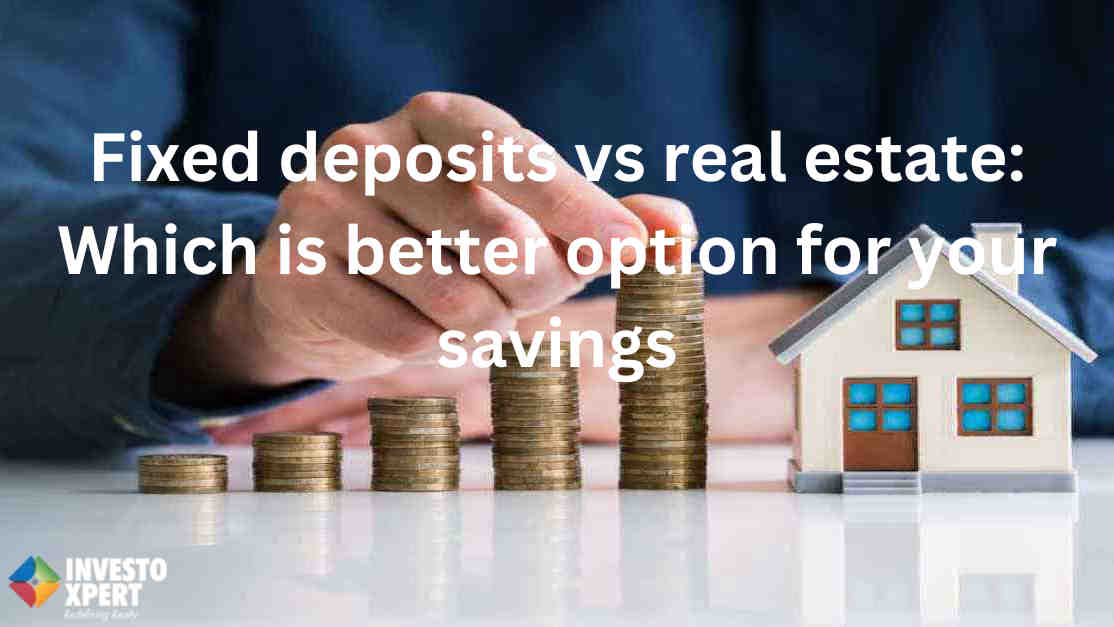
Fixed Deposits Vs Real Estate Which Is Better Option For Your Savings?
When looking to increase their wealth, investors frequently debate between more conventional options, such as Fixed Deposits (FDs), and the physical appeal of real estate. Both investing alternatives have unique benefits and drawbacks, so it's important to comprehend their nuances in order to make wise financial decisions.
Read Also: Top 10 Best Residential Projects in Thane
Read Also: Top 10 Best Luxury Apartments in Bangalore
Read Also : Top 10 Best Luxury Apartments in Chennai
Read Also : Top 10 Best Luxury Apartments in Hyderabad
Read Also : Top 10 Best Luxury Apartments in Goa
In order to help investors by giving the tips on financing investment property make the best decision possible, this essay compares the features of real estate investments with financial derivatives. The essay provides a thorough analysis of real estate with fixed deposits.
What Is The Meaning Of Fixed Deposits (Fds)?
With a defined duration and predetermined interest rate, fixed deposits are a traditional type of investment where people deposit a lump sum payment with a financial institution. Let's examine the benefits and drawbacks of FDs.
What Are The Advantages Of FD?
- Security and safety
FDs are well known for their stability and safety, offering a guaranteed return on investment while protecting investors from volatile markets.
2. Returns that are predictable
A fixed interest rate helps investors by enabling them to forecast returns throughout the course of the investment period with accuracy.
Read Also: Top 10 Best Residential Projects in Hyderabad
Read Also: Top 10 Best Residential Projects In Kochi
Read Also: Top 10 Best Residential Projects In Chandigarh
Read Also: Top 10 Best Residential Projects In Faridabad
Read Also: Top 10 Best Residential Projects in Navi Mumbai
3. Liquidity
High levels of liquidity are provided by FDs, enabling investors to take money out before to maturity with the possibility of penalties.
What Are The Disadvantages Of FD?
- Low Yields
Even while FDs offer protection, their returns are sometimes less than those of riskier assets like real estate.
2. Impact of inflation
FD returns might not constantly beat inflation, which would eventually cause a decline in buying power.
What Is The Scenario Of Real Estate Investments?
Investing in real estate involves acquiring and holding onto physical assets, mostly properties, with the intention of either making a profit or maybe increasing its value. This kind of investment is different from financial products like stocks or bonds in that it has a direct relationship to tangible assets.
Let’s Know About The Pros Of Real Estate
- Appreciation
Capital appreciation, or a rise in the property's worth over time, is a possibility with real estate.
2. Rental Revenue
Rent payments provide investors with a consistent source of revenue, increasing their total return on investment. Know about the rental market trend.
3. The act of diversification
Benefiting from diversity, real estate acts as a buffer against market swings that might affect more conventional assets.
Cons Of Real Estate
- Lack of liquidity
Real estate investments, in contrast to FDs, are comparatively less liquid since selling a property might take time and result in transaction expenses.
2. Control and upkeep
Owning a property entails continuing obligations including upkeep, managing the property, and interacting with renters.
3. Reliance On The Market
Due to their reliance on market circumstances, real estate values are vulnerable to downturns in the economy.
What Factors Influence The Investment Decision?
It's important to carefully consider your financial objectives, risk tolerance, investment horizon, and personal preferences when deciding between fixed deposits (FDs) and real estate. When choosing between the two, keep the following things in mind:
- Risk tolerance
FDs: These can be a better option if you prioritize capital preservation and are risk averse. Your principal is safe, and they promise a return.
Real estate: Investments in real estate are more prone to market swings and volatility. Real estate may be a possibility if you are ready to ride out market cycles and can take on a certain amount of risk.
- Investment horizon
FDs: For short- to medium-term objectives, FDs are typically appropriate. They are perfect for objectives with a few-year time horizon since they provide liquidity, enabling you to access your cash when required.
Real estate: Investments in real estate are usually made for the long term. Over time, property prices may increase, and rental income may boost the total return. For long-term financial objectives, take into account real estate.
- Return expectations
FDs: Compared to potentially higher profits from riskier investments, FDs offer a fixed and predictable return that is often lower. FDs can be a better option if stability and predictability are important to you.
Read Also : Top 10 Best Luxury Apartments in Bhopal
Read Also : Top 10 Best Affordable Housing Projects in Noida
Read Also : Top 10 Best Luxury Apartments in Kolkata
Read Also : Top 10 Best Affordable Housing Project in Delhi
Read Also : Top 10 Best Affordable Housing Projects in Gurgaon
Real estate: Investing in real estate may yield larger returns, particularly through capital growth and rental income. Returns, however, are not certain, and the real estate market is subject to cycles. Also, know about the importance of location in property investment.
- Liquidity needs
FDs: FDs have a high level of liquidity and charge penalties if you take money out before the account matures. FDs could be a better option if you expect to require access to your money soon.
Real estate: Selling a piece of real estate might take some time because it is somewhat illiquid. Property may not be the ideal option if you need money.
- Diversification
FDs: FDs offer stability and a fixed income component, making them a useful addition to a diversified portfolio.
Real estate: Since the value of real estate is not closely linked to that of standard financial instruments, it provides benefits for diversification. Having real estate in your portfolio might aid with risk distribution.
Read Also : Top 10 Best Affordable Housing Projects in Faridabad
Read Also : Top 10 Best Affordable Housing Project in Pune
Read Also : Top 10 Best Luxury Apartments in Ahmedabad
Read Also : Top 10 Best Luxury Apartments in Chandigarh
Read Also : Top 10 Best Luxury Apartments in Ghaziabad
- Financial goals
FDs: Good for capital preservation, emergency savings, and short-term objectives.
Real estate: Take into account long-term objectives like saving for retirement or accumulating money over time.
- Tax implications
FDs: Taxable interest income is received from FDs. Think about the tax ramifications according to your income and tax bracket.
Real estate: The tax consequences might change depending on local tax rules, capital gains, and rental income, among other things. Speak with an expert in taxes for advice.
- Management involvement
FDs: Need little maintenance; all you have to do is deposit the funds; the bank will take care of the rest.
Real estate: Requires proactive management, which includes upkeep of the property, tenant relations, and market research.
Read Also : Top 10 Best Luxury Apartments in Kochi
Read Also : Top 10 Best Luxury Apartments in Lucknow
Read Also : Top 10 Best Affordable Housing Project in Goa
Read Also : Top 10 Best Affordable Housing Project in Lucknow
Read Also : Top 10 Best Affordable Housing Project in Ghaziabad
Read Also : Top 10 Best Affordable Housing Project in Ahmedabad
Read Also : Top 10 Best Affordable Housing Project in Hyderabad
Read Also : Top 10 Best Affordable Housing Project in Bangalore
Read Also : Top 10 Best Affordable Housing Project in Mumbai
Read Also : Top 10 Best Affordable Housing Project in Chennai
Read Also : Top 10 Best Affordable Housing Project in Bhopal
Read Also : Top 10 Best Affordable Housing Project in Chandigarh
Read Also : Top 10 Best Luxury Apartments in Delhi
Read Also : Top 10 Best Affordable Housing Project in Kochi
Read Also : Top 10 Best Affordable Housing Project in Kolkata
Read Also : Top 10 Best Luxury Apartments in Faridabad
Read Also : Top 10 Best Commercial Property in Gurgaon
Read Also : Top 10 Best Commercial Property in Faridabad
Read Also : Top 10 Best Commercial Property in Mumbai
Read Also : Top 10 Best Commercial Project in Pune
Read Also : Top 10 Best Commercial Property In Delhi
Read Also : Top 10 Best Commercial Property in Ghaziabad
Read Also : Top 10 Best Luxury Villas in Mumbai 2023
Read Also : Top 10 Best Luxury Villas in Chennai
Read Also : Top 10 Best Luxury Villas in Bangalore
Read Also : Top 10 Best Luxury Villas in Gurgaon
Read Also : Top 10 Best Luxury Villas in Pune
Read Also : Top 10 Best Luxury Villas in Hyderabad
Read Also : Top 10 Best Luxury Villas in Lucknow
Read Also : Top 10 Best Luxury Villas in Chandigarh
Read Also : Top 10 Best Commercial Property in Chandigarh
Read Also : Top 10 Best Commercial Property in Bangalore
Read Also : Top 10 Best Commercial Property In Chennai
Read Also : Top 10 Best Commercial Property In Ahmedabad
Read Also : Top 10 Best Commercial Property in Hyderabad
Read Also : Top 10 Best Commercial Property in Kolkata
Read Also : Top 10 Best Commercial Property in Lucknow
Read Also : Top 10 Best Commercial Property in Bhopal
Read Also : Top 10 Best Luxury Villas in Ghaziabad
Read Also : Top 10 Best Luxury Villas in Ahmedabad
Read Also : Top 10 Best Luxury Villas in Delhi
Read Also : Top 10 Best Luxury Villas in Kolkata
Read Also : Top 10 Best Commercial Property in Kochi
Read Also : Top 10 Best Commercial Property In Goa
Read Also : Top 10 Best Villas in Noida Extension
Read Also : Top 10 Interior Designers In Ghaziabad
Read Also : Top 10 Interior Designers In Ahmadabad
Read Also : Top 10 Interior Designers in Chandigarh
Read Also : Top 10 Interior Designers In Kochi
Read Also : Top 10 Interior Designers In Lucknow
Read Also : Top 10 Interior Designers in Faridabad
Read Also : Top 10 Interior Designer In Goa
Read Also : Top 10 Interior Designers In Bangalore
Read Also : Top 10 Interior Designer In Kolkata
Read Also : Top 10 Interior Designers In Chennai
Read Also : Top 10 Interior Designers In Bhopal
Read Also : Top 10 Best Interior Designers in Mumbai
Read Also : Top 10 Interior Designers In Hyderabad
Read Also : Top 10 Interior Designers in Pune
Read Also : Top 10 Interior Designers in Thane
Read Also : Top 10 Best Lowrise Apartments In Noida
Read Also : Top 10 Best Lowrise Apartments In Ghaziabad
Read Also : Top 10 Best Lowrise Apartments in Chennai
Read Also : Top 10 Best Low-rise Apartments In Ahmedabad
Read Also : Top 10 Best Low-Rise Apartments In Bangalore
Read Also : Top 10 Best Low-Rise Apartments In Mumbai
Read Also : Top 10 Best Lowrise Apartments In Hyderabad
Read Also : Top 10 Best Low-Rise Apartments In Bhopal
Read Also : Top 10 Best Low-Rise Apartments In Faridabad
Read Also : Top 10 Best Low-Rise Apartments In Lucknow
Read Also : 2 BHK Flat For Sale In Hinjewadi
Read Also : 2 BHK Flat for Sale in Kharadi
Read Also : 3 BHK Flats for Sale in Kharadi
Related Articles

Types Of Building Plans How To Design, Advantages
Types Of Building Plans How To Design, AdvantagesBuilding blueprints offer an image of how a structure will look when it is finished. Contractors and

What are Home Buyers expecting from Modi Government’s Maiden Budget?
What Are Home Buyers Expecting From Modi Government’s Maiden Budget?Expecting the now-fabled "achche din," homebuyers had high hopes for the first bud

Why are smart homes gaining popularity
Why Are Smart Homes Gaining Popularity?Technology is gradually permeating the nation's housing industry. The modern home buyer is becoming more and mo

Master Plan - What is it, Importance, Advantage & How it is made
Master Plan - What Is It, Importance, Advantage & How It Is Made?The city's long-term plans are called master plans. They therefore need to be com