Delhi NCR Enforces Stage 2 GRAP Amid Severe Pollution Crisis
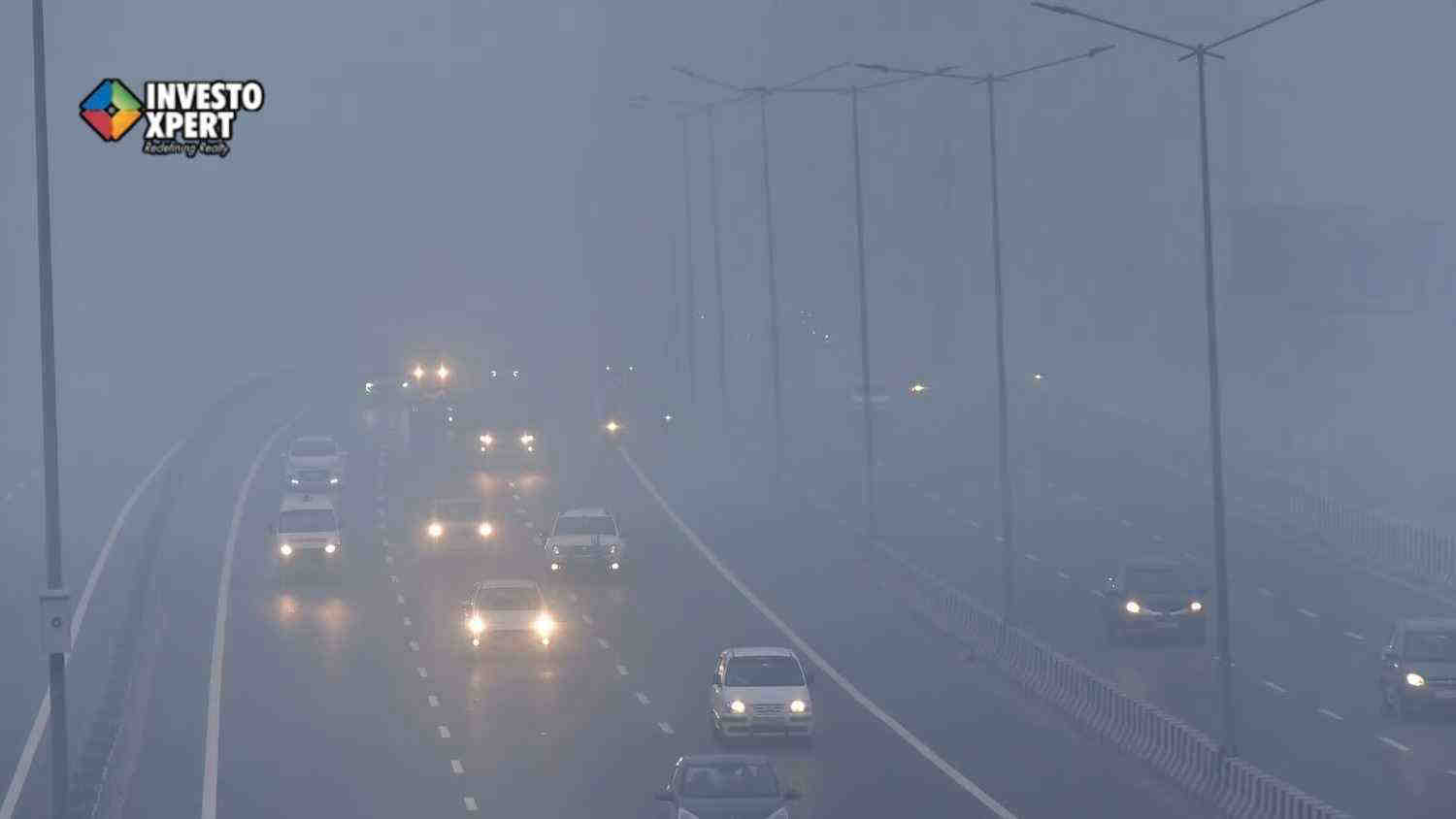
Delhi NCR struggles with deteriorating air quality and increasing pollution levels as the country anticipates the festival of lights and fireworks. When the Air Quality Index (AQI) fell to 317 on October 22, 2024, pollution control officials implemented Stage 2 of the Graded Response Action Plan (GRAP). Here are some potential actions that residents of Property In Delhi NCR might anticipate in the days preceding Diwali.
When a thick layer of smog coated important areas including Nehru Place, Kalkaji, Anand Vihar, and Akshardham Temple, Delhi's air quality index (AQI) went from "poor" on October 14, 2024, to "very poor" on October 22, 2024, according to the Central Pollution Control Board (CPCB).
The air pollution control panel moved from GRAP Stage 1 to Stage 2 as public health and safety concerns increased in order to keep the air quality from falling to a dangerous level.
Nonetheless, Delhi NCR has already implemented a robust action plan to reduce the skyrocketing pollution levels. In this post, InvestoXpert revisits the previously established Stage III of GRAP and provides more details on the latest advancements, preventative measures, and Stage 2 requirements.
What Is Understood By The Term GRAP And Its Stages?
Delhi NCR uses a series of procedures called the GRAP to monitor air pollution levels. Based on the region's continuous AQI, it is roughly separated into four phases. Delhi NCR is plagued by a hazy cloud every winter, endangering the health of millions of people. The air continues to be persistently filthy despite measures, with AQI levels often above the permissible limit. It's important to remember that an AQI value of 60 or more is considered unhealthy.
The National Capital Delhi imposes strict GRAP guidelines: 2024
A brief overview of GRAP's implementation and its effects on citizens of Delhi NCR is provided below:
Specifics of the GRAP limitations for Stage 1 (October 14, 2024)
Before enforcing this preventative action plan, the Commission for Air Quality Management (CAQM) examined predictions from the Indian Institute of Tropical Meteorology and the India Meteorological Department (IMD). This winter-specific anti-pollution program concentrates on trash management, road cleaning, and dust reduction at construction sites. These are some potential limitations and actions under Stage 1.
- Strict dust and emission regulations at industrial power plants, building sites, etc.; vehicle Pollution Under Control (PUC) certificate checks; and improved traffic control to lower emissions
- Better garbage management, including prohibitions on burning rubbish outdoors
- Utilizing diesel generators and other energy fuels sparingly
- Prohibition of the use of coal or firewood in restaurants and manufacturing facilities
- Construction and deconstruction of projects larger than 500 square meters are prohibited, and outdated gasoline and diesel cars that are ten to fifteen years old are restricted.
- Implementation of traffic control strategies in high-density regions, such as the use of specialized traffic police
- Trucks are sprayed with water to lessen dust on the road.
- Complete prohibition of firecracker manufacture, sale, storage, and detonation until January 1, 2025
- On October 15, 2024, pollution control agencies in Uttar Pradesh, Rajasthan, Delhi, and Haryana are to begin putting Stage 1 measures into effect.
- On October 17, 2024, an anti-dust portal was established to control activity on building sites.
The Delhi Pollution Control Committee (DPCC) has introduced a "Dust Pollution Control Self-Assessment" site in conjunction with the GRAP implementation, requiring all building and demolition projects in the National Capital to register and submit dust control audits every 14 days. All constructions larger than 500 square meters are subject to this new regulation.
The authorities said in the official notice that the portal has capabilities including online self-assessment and remote monitoring that would supervise the use of dust control measures at all building sites in the Capital. To avoid penalties like environmental compensation costs and possibly stopping work, developers must file a statement every two weeks and do routine self-audits.
In addition, video fencing and inexpensive PM2.5 and PM10 sensors are required for building sites in the National Capital Region (NCR) with plot sizes of 500 square meters or more in order to provide real-time air quality monitoring. Depending on their size, projects ranging from 5,000 to 10,000 square meters must additionally use anti-smog weapons. There should be at least four firearms in project areas larger than 20,000 square meters.
The developers can end the monitoring process by marking the project status on the portal when a project is finished. It is anticipated that this action will track the project's pollution level during the building period and reveal any potential gaps in the safeguards.
Know about the Details of the Stage 2 GRAP restrictions (22 October 2024)
Health cautions were issued to the general public, particularly those with respiratory conditions, when a dense blanket of pollution covered portions of Delhi NCR. According to experts, an 11-point action plan that will strengthen some of the safeguards put in place in Stage 1 is now in the execution stage. Some of the actions might include, for example, water spraying on designated roadways, mechanical or vacuum cleaning, correct disposal of accumulated dust, and more stringent inspections at construction or demolition sites.
In addition, CAQM promotes public transit use to reduce further emissions from private automobiles. It's also advised that car air filters be changed on a regular basis. Nevertheless, experts warn that because of unfavorable weather and climate, residents of the National Capital may continue to suffer from the progressive deterioration in air quality.
Stage III GRAP Implementation In 2023
Around the same time last year, pollution control officials had to implement Stage III GRAP restrictions due to the city's concerns about air quality levels. As a result, all non-essential building and demolition operations were prohibited throughout the capital. Furthermore, older cars that met BS III (petrol) and BS IV (diesel) criteria could not be used.
Details of the GRAP III restrictions
The Commission for Air Quality Management (CAQM) oversees stage III of the GRAP, which includes these strict regulations. During this phase, the following activities are strictly forbidden:
- Earthwork consists of drilling, filling, boring, and excavation.
- Activities related to structural building, from manufacturing to destruction
- Construction material movement, including loading and unloading
- Raw material transfer, including fly ash
- Movement of vehicles on unpaved surfaces
- Infrastructure projects include installing waterlines and sewers.
- Flooring projects that use stones, tiles, etc.
- Additional tasks, such as painting, waterproofing, grinding, etc.
However, initiatives pertaining to national security, defense, railroads, and metro were exempt from the restriction.
Can Construction Ban Is Impacting The Realty Industry Of Delhi NCR?
Including Greater Noida West, Yamuna Expressway, New Gurgaon, Property In Noida Expressway, Dwarka Expressway, Central Noida, Greater Faridabad, Raj Nagar Extension in Ghaziabad, Sohna Road, and Golf Course Extension Road, the National Capital saw the construction of more than 4.5 lakh residential units in Delhi NCR in 2023. Together, these regions include around 4 lakh units.
An industry study claims that since residential developments in Delhi NCR often take six to eight years to complete, a construction embargo owing to air pollution might be a major setback for ongoing projects. According to experts, there might be major repercussions if development is prohibited because of the bad air quality. If work is prohibited for a month, this can cause a project to be delayed by at least three to four months.
Does Construction Ban Impact Property Prices?
Experts claim that development limits barely affect real estate values. However, the construction prohibition could cause the project's completion to be delayed. Over 1.3 lakh apartments are now being built in Greater Noida West and there are many New Launch Projects In Noida that might have late deliveries due to the impact of rising pollution.
Furthermore, accessibility, affordability, urban mobility, and closeness to key job centers and city centers dictate real estate values in most cities more so than environmental issues.
Despite the fact that real estate transactions in Delhi NCR have been increasing gradually, the ongoing limitations might have a major effect on project delivery of the New Launch Projects In Delhi as well. On the plus side, though, home sales have been robust in spite of the restrictions, and it is anticipated that the favorable demand will continue.
Conclusion
As the Capital's pollution control board applies the second stage of GRAP to reduce increasing pollution levels, the traditional appeal of firecrackers during Diwali remains a worry. If the pollution levels do not improve in the upcoming weeks, regulatory officials may impose more stringent regulations, since the AQI has been progressively falling.
CALL US: 9880083870
MAIL US: info@investoxpert.com
Read More: 2 BHK in Noida Extension
Read More: 3 BHK in Noida Extension
Read More: 4 BHK in Noida Extension
Read More: 2 BHK in Greater Noida West
Read More: 3 BHK in Greater Noida West
Read More: 4 BHK in Greater Noida West
Read More: 2 BHK in Noida Expressway
Read More: 4 BHK in Noida Expressway
Read More: Godrej Properties Noida
Read More: Top 10 Best Luxury Villas in Hyderabad 2024
Read Also : Top 10 Best Luxury Villas in Noida
Read Also : Top 10 Best Residential Projects in Noida
Read Also : Top 10 Best Residential Projects in Pune
Read Also : Top 5 Best Luxury Projects in Delhi
Read Also : Top 10 Best Luxury Projects in Bangalore
Read Also : Top 10 Best Luxury Projects in Gurgaon
Read Also : Top 10 Best Low Rise Apartments in Gurgaon
Related Articles

Types Of Building Plans How To Design, Advantages
Types Of Building Plans How To Design, AdvantagesBuilding blueprints offer an image of how a structure will look when it is finished. Contractors and

What are Home Buyers expecting from Modi Government’s Maiden Budget?
What Are Home Buyers Expecting From Modi Government’s Maiden Budget?Expecting the now-fabled "achche din," homebuyers had high hopes for the first bud

Why are smart homes gaining popularity
Why Are Smart Homes Gaining Popularity?Technology is gradually permeating the nation's housing industry. The modern home buyer is becoming more and mo

Master Plan - What is it, Importance, Advantage & How it is made
Master Plan - What Is It, Importance, Advantage & How It Is Made?The city's long-term plans are called master plans. They therefore need to be com